The paper sash: what an OBI strip tells you about a Japanese pressing
It looks like packaging. It's closer to a passport. A short guide to reading the band of paper that collectors look for first.

Pull a Japanese record from a crate and there's often a strip of paper wrapped around the left edge of the jacket. Most people's first instinct is to slide it off. Don't. That strip is the obi, named after the sash tied around a kimono, and for a lot of collectors it's the first thing they check.
Japanese labels wrapped their LPs in these bands from the start. The obi carried what a shop needed to know at a glance: the title in Japanese, the label, a catalogue number, the original retail price, and sometimes a line or two of promotional copy or the name of a series.
Why it matters
Because most first owners threw them away. An obi was packaging, after all, and it tore, faded and got lost. The ones that survived are scarce, which is why a Japanese pressing with its obi is treated as complete, and the same record without it is, to a collector, missing something.
An obi turns a record into a document: where it was made, for whom, and in which version.
How to read one
Start with the catalogue number. It tells you the label and roughly where the pressing sits in that label's history, which is the fastest way to tell an early pressing from a later reissue. The printed price helps too: it changed over the years, so it can point you toward when that copy was made.
Then look at the condition of the band itself. Sun fading, tears at the fold and old tape all count. An obi in good shape is worth protecting even when the jacket isn't.
Who pressed it in Japan. The logo alone can tell you a lot about when.
The album's title in Japanese, usually printed top to bottom. For Abraxas it's 天の守護神.
Written in katakana, the script Japanese uses for foreign names: サンタナ, Santana.
A line or two selling the record, or the name of the reissue series it belongs to.
The fastest way to tell an early pressing from a later reissue.
Printed in yen. It changed over the years, so it helps date the copy.
And that's how most of them got lost.
Looking after it
Keep the obi on the jacket, inside an outer sleeve, so it can't slide off or catch. Never tape it. If it's already loose, store it in the sleeve with the record so the two never get separated. They're worth far more together.

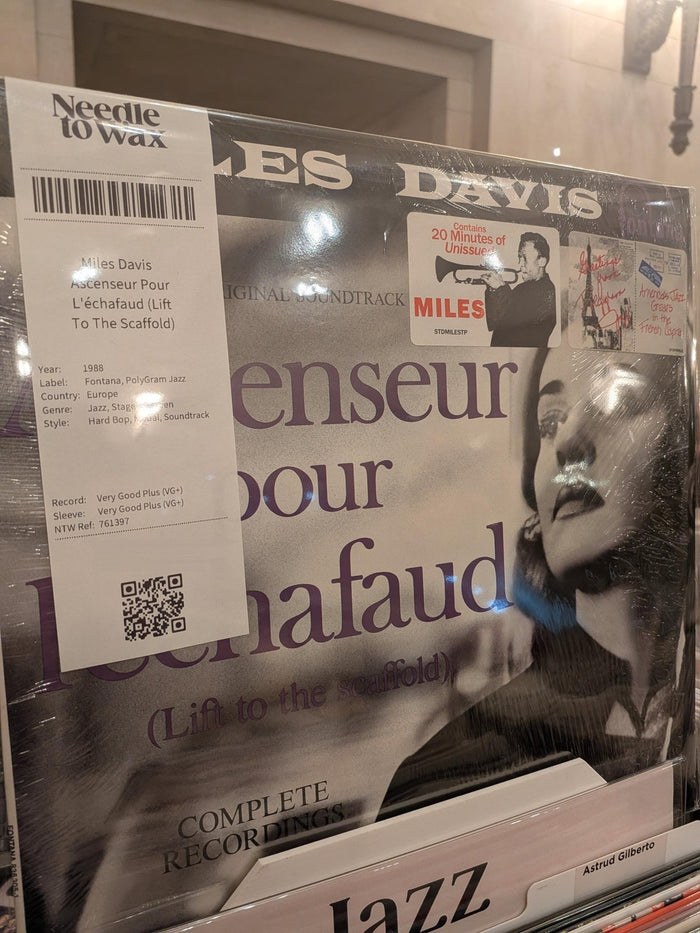
Why we print our own
Every record that goes into a Needle to Wax crate gets a strip of our own, printed in-house and applied by hand. We borrowed the idea from Japan for the same reason they invented it: you should be able to read the essentials of a record without pulling it out of the crate.